Imagine holding a fully functional computer that's no bigger than a credit card. It fits in your wallet, runs on a powerful ESP32 chip, displays information on a tiny e-ink screen, and even communicates via NFC. This isn't science fiction—it's a real DIY project that you can build yourself. In this article, we'll explore what makes this miniature marvel tick, potential applications, and how you can create your own version.
What Is the Credit Card-Sized ESP32 Computer?
This project shrinks a complete computing system into the dimensions of a standard credit card (85.60 × 53.98 mm). At its core is the ESP32 microcontroller, a low-cost, low-power system-on-chip with integrated Wi-Fi and Bluetooth. The device also includes a small e-ink display for crisp, low-power visuals, and an NFC (Near Field Communication) chip for contactless data exchange. The result is a portable gadget that can handle tasks like showing notifications, storing digital business cards, or acting as a secure token.
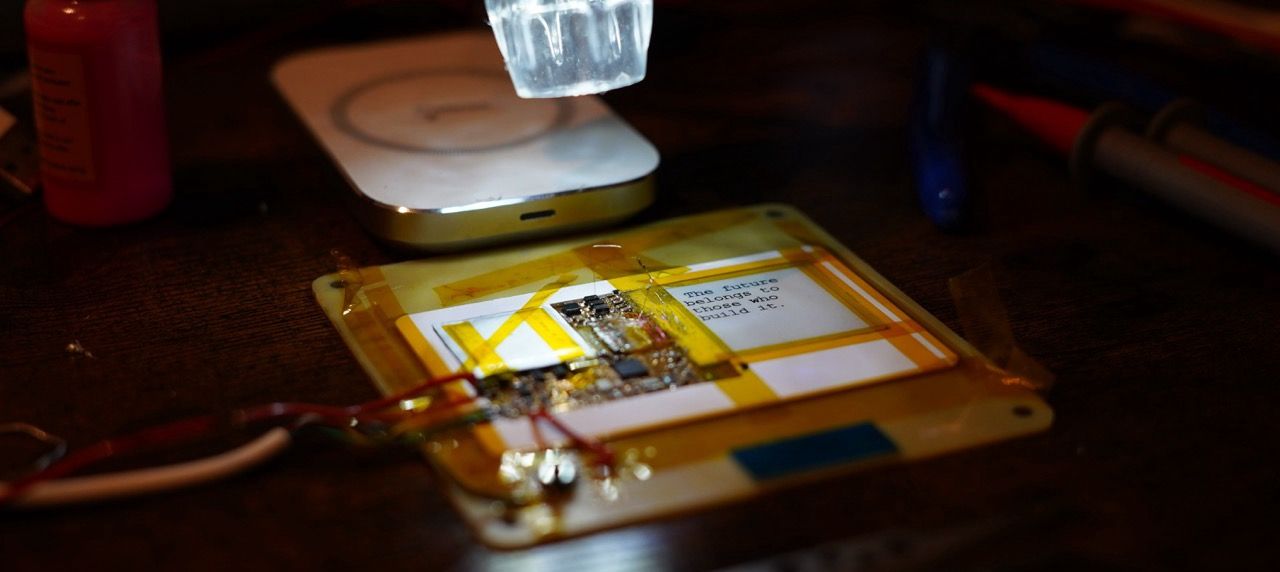
Key Components and Design
To understand how such a tiny computer works, let's break down its essential parts:
- ESP32 Processor: A dual-core processor with 520 KB of SRAM, capable of running at up to 240 MHz. It supports Wi-Fi 802.11 b/g/n and Bluetooth 4.2/BLE, making it ideal for IoT applications.
- E-Ink Display: A monochrome screen (typically 1.54 or 2.13 inches) that consumes power only when updating. It offers excellent readability in sunlight and retains the image without power.
- NFC Module: Enables wireless communication with smartphones and other NFC readers. Can be used for payments, access control, or data transfer.
- Power Management: A small lithium-polymer battery (like those used in wearables) and a charging circuit keep the device running for days or weeks depending on usage.
- Circuit Board: A custom PCB designed to fit the credit card form factor, with components soldered directly or via ultra-thin modules.
What Can You Do With It?
The credit-card computer isn't just a novelty—it has real-world uses. Here are a few ideas:
- Digital Business Card: Store your contact information on the e-ink display and share it via NFC with a tap.
- Password Manager: Display one-time passwords or store encrypted credentials offline.
- Smart Home Remote: Control lights, locks, or thermostats via Wi-Fi from a card you always have on you.
- Notification Display: Sync with a calendar or messaging app to show upcoming events or alerts.
- Personal Data Vault: Keep sensitive information (backups, medical details) encrypted on the device.
- E-Paper Badge: Use it as a conference badge that can update dynamically.
How to Build Your Own
Creating a credit-card-sized ESP32 computer is a rewarding electronics project. While it requires some soldering and programming skills, the steps are well-documented. Here's a high-level overview:
1. Gather Components
You'll need an ESP32 module (like the ESP32-WROOM-32), a compatible e-ink display driver board, an NFC chip (e.g., PN532), a battery (e.g., 100 mAh LiPo), and some passive components. Many makers sell all-in-one PCBs designed for this purpose.
2. Design or Source a PCB
If you're comfortable with PCB design software (KiCad, Eagle), you can create a board that fits the credit card dimensions. Alternatively, purchase a pre-made PCB from online communities like Tindie or Seeed Studio.
3. Assemble the Hardware
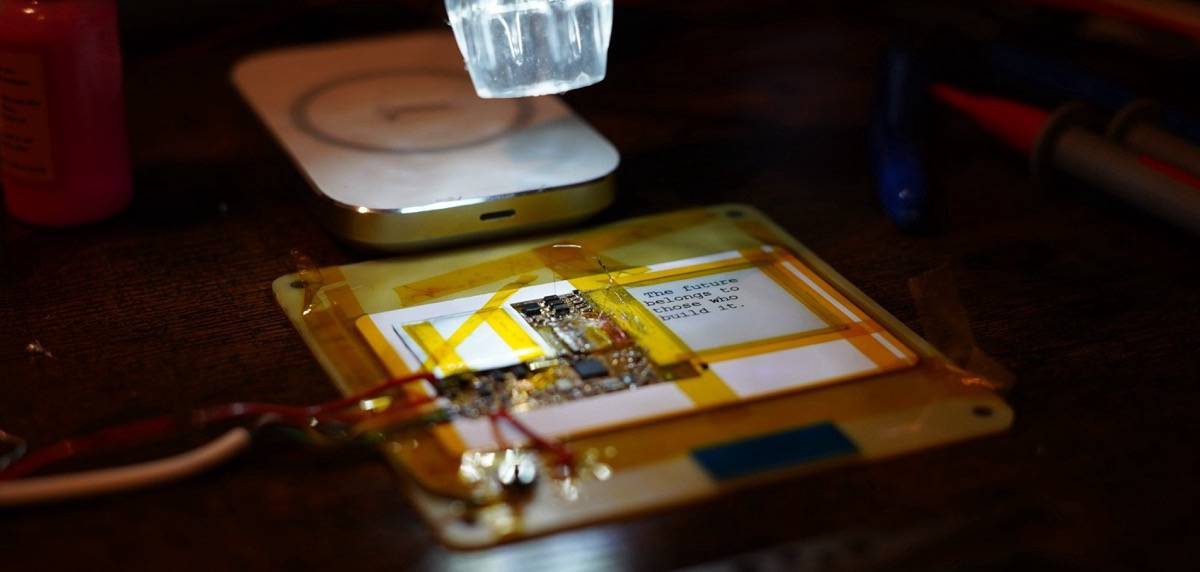
Solder the components onto the board carefully. Pay attention to polarity of the battery and orientation of the display. Use a thin battery to keep the overall thickness under a few millimeters.
4. Program the ESP32
Use the Arduino IDE or PlatformIO to write code. Libraries like GxEPD2 for e-ink displays and NFC for communication are essential. You can push updates over Wi-Fi or via USB.
5. Test and Enclose
After programming, test each function—display updates, NFC reads, Wi-Fi connectivity. You may want to 3D print a slim case or simply laminate the board protectively.
Challenges and Tips
Building a credit-card computer isn't trivial. Here are common hurdles and solutions:
- Size Constraints: Using standard through-hole components will make it too thick. Use surface-mount (SMD) parts and thin LiPo batteries.
- Power Consumption: The ESP32 can be power-hungry. Optimize code for deep sleep, and only wake the device when needed for display updates or NFC interactions.
- Antenna Placement: If you include Wi-Fi/BT, ensure the antenna isn't blocked by metal or the battery. Keep it near the edge of the board.
- Component Sourcing: Not all e-ink modules are as thin. Look for Seeed Studio's E-Paper display or Waveshare's 1.54-inch versions designed for integration.
Community and Open Source Resources
The maker community has embraced this mini computer. Check out these resources:
- GitHub Repositories: Search for "credit card ESP32" to find PCB designs, firmware examples, and case files.
- Hackaday Projects: Look for builds like the "ESP32 Business Card" or "NFC E-Ink Card".
- Forums: Reddit's /r/esp32 and /r/electronics often feature discussions about compact designs and power optimization.
What's Next?
As hardware gets smaller and cheaper, the credit-card computer could evolve into a mainstream tool. Imagine a universal wallet card that can replace several physical cards (ID, credit, loyalty) while also being a smart device. With the ESP32's computing power and the low energy of e-ink, the possibilities are limited only by your imagination.
Whether you're a seasoned maker or a curious beginner, building your own wallet-sized computer is a fantastic way to learn about embedded systems, wireless communication, and product design. Start small, iterate, and soon you'll have a functional computer that fits in your back pocket.